
Green coffee beans are unroasted coffee. With a heavy pan or a hot-air popcorn popper, good ventilation, and about 15 to 20 minutes, you can roast them at home. Keep the beans moving over the heat, listen for a popping sound called first crack, cool them quickly, let them rest, then grind and brew.
The steps below use ordinary kitchen tools and the green coffee beans sold by Dubai Coffee, an Istanbul-based shop that ships across Türkiye and worldwide.
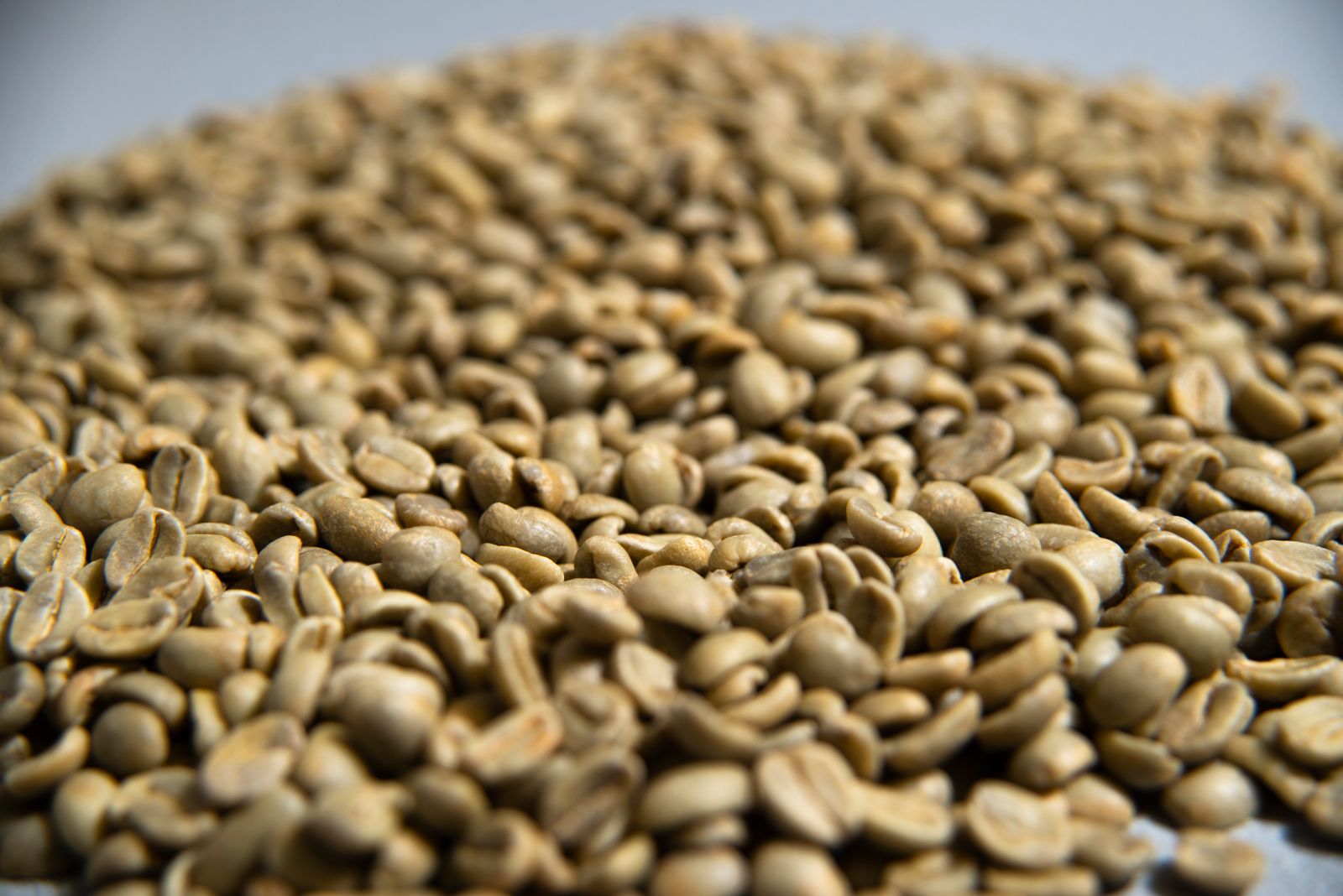
What are green coffee beans?
Green coffee beans are the dried seeds of the coffee cherry, cleaned and prepared for roasting but not yet heated. They are usually pale green or yellowish, hard and dense, and smell grassy rather than like a finished cup.
Roasting is what turns those seeds into coffee. As the beans dry and brown, water leaves them, they swell, and sugars and amino acids react (the Maillard reaction). When enough steam and gas build up inside the bean, it splits with an audible pop — first crack. That is the start of a usable light roast, not automatically the end of the roast.
This article is about roasting green beans to drink as coffee, not about green-coffee extract supplements. Stored cool, dry, dark, and sealed, green coffee keeps much longer than roasted beans, which start losing aroma within weeks.
Why roast at home?
Home roasting lets you choose the roast level and work in small, fresh batches. The same Brazil Rio Minas lot can be dropped just after first crack for a lighter cup, or taken further toward a chocolatey medium roast. Comparing a washed Colombia Supremo with a natural Brazil, or an Arabica with a Vietnam Robusta, also teaches you more about origin and species than a tasting note alone.
What you need
You do not need a commercial drum roaster for your first batches.
Beans. Start with 100–200 g of green coffee — enough for several small test roasts.
A roaster. A heavy stainless-steel or cast-iron skillet or wok on the stove is the most accessible option. A dedicated hot-air popcorn popper is a common next step; use it only outdoors or under a strong vent, never leave it unattended, and do not return a popper used for coffee to kitchen popcorn duty. Check the manufacturer’s guidance, because some models overheat or shut off mid-roast.
Cooling and safety. Two metal colanders let you toss the hot beans and cool them quickly. Add a spoon, oven mitts, and a timer. Roasting produces smoke and flammable chaff, so roast outside if you can, or under a strong extractor fan with windows open. Stay with the pan the entire time.
How to choose green beans for your first roast
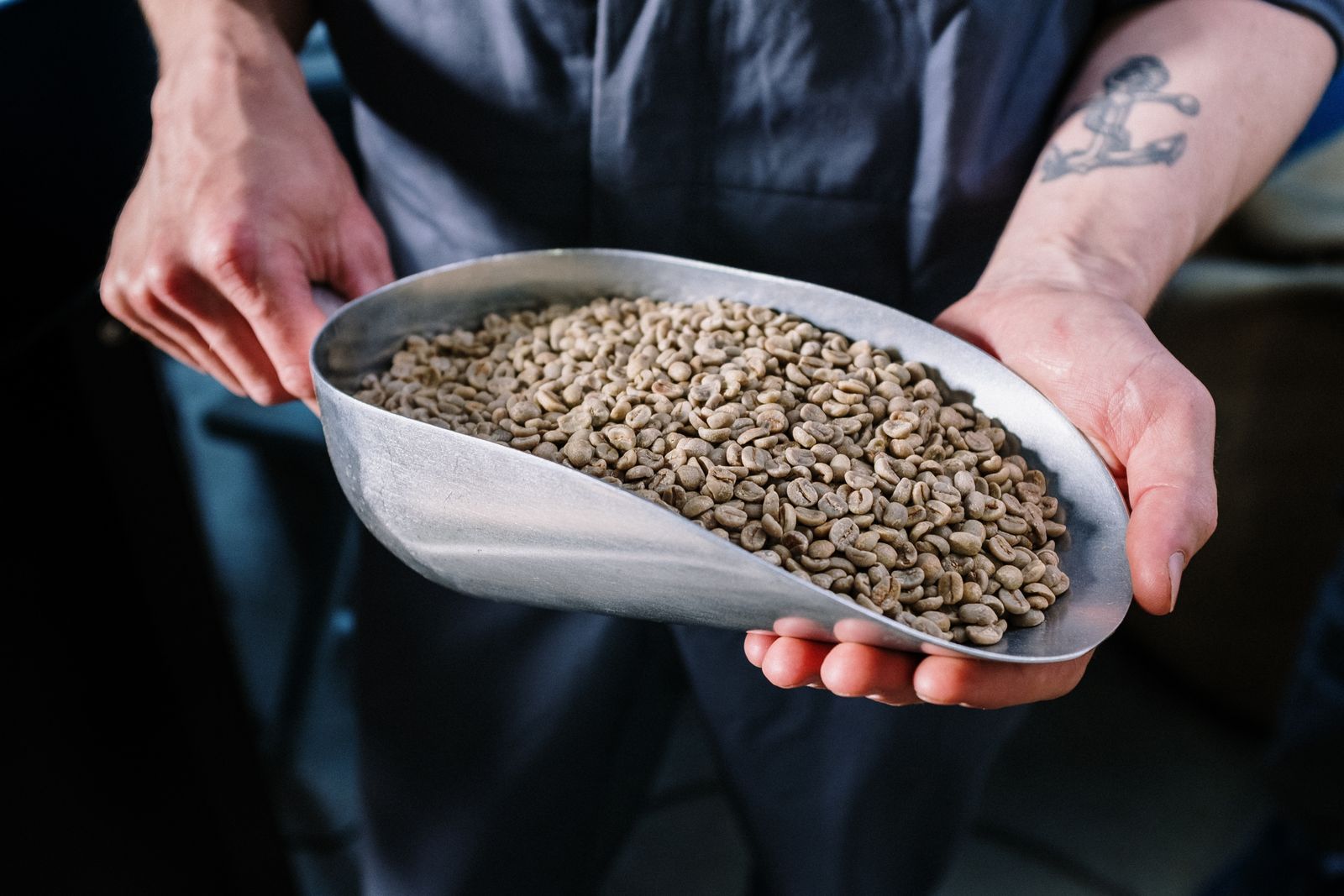
Buy green coffee that lists origin, species (Arabica or Robusta), and process (washed or natural). Altitude, grade or screen size, and harvest year are useful extras. Dubai Coffee’s green range covers five origins, which is enough to learn on.
A forgiving first Arabica: Brazil Rio Minas. The Brazil Rio Minas green beans are 100% Arabica from Minas Gerais, naturally processed (sun-dried). The product page lists notes of chocolate, pistachio, and hazelnut, a 2025 harvest year, and a cupping score of 82. This is typically a low-acid coffee and a comfortable medium roast.
A clean washed coffee: Colombia Supremo. Colombia Supremo green beans are listed as the Castilla variety, washed, grown between 1,340 and 1,830 meters, with notes of caramel, orange, and chocolate — a good second roast after Brazil. The Venezuela green beans — Castillo and Caturra, washed, from 1,700 to 2,200 meters, with caramel, cacao, and fruity notes — roast in a similar way and compare well side by side.
Floral and citrus: Ethiopia Yirgacheffe. The Ethiopia green beans are listed as Yirgacheffe heirloom coffee, washed, from 1,700 to 2,200 meters. Dubai Coffee’s roasted Ethiopia Yirgacheffe lists jasmine, lemon, bergamot, and honey. Those aromatics show best if you do not roast too dark; try this after you can hear first crack reliably, and brew it as pour-over.
For espresso blends: Vietnam Robusta. Vietnam Robusta green beans are Coffea canephora, Grade 1 (R1), Screen 16, naturally processed and wet polished. Robusta brings body and a thicker crema, but it is not the gentlest first roast on its own. Roast a small batch, then combine it with a Brazil or Colombia Arabica — the same idea as Dubai Coffee’s Classic and Strong Venezuela–Vietnam blends.
How to roast coffee in a pan (step by step)
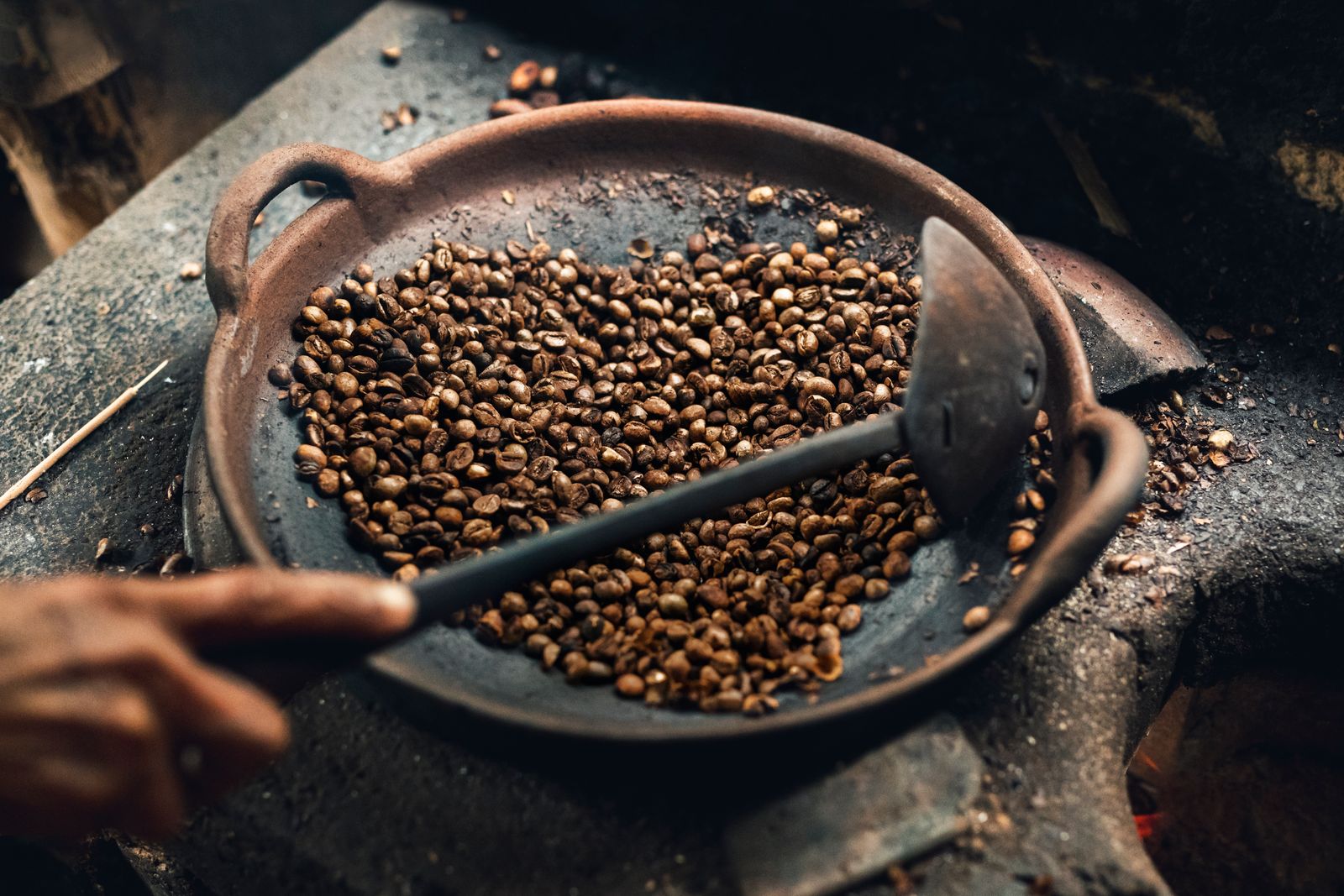
Times vary with your stove and pan, so watch the stages rather than a fixed clock.
1. Weigh and prepare. Weigh 100–150 g of green beans — a single layer you can stir easily. Set colanders, spoon, and timer by the stove, and open a window or step outside.
2. Preheat the pan. Set a heavy pan over medium heat. You want steady heat, not a smoking-hot surface that scorches the first beans.
3. Add the beans and keep them moving. Pour them in and stir or toss continuously. If they sit still, the beans on the metal will burn while the ones on top stay green.
4. Drying (green to yellow). For the first several minutes the beans turn from green to yellow and smell grassy, then like hay or raw grain. Keep stirring.
5. Browning. The beans turn tan, then light brown, and the smell becomes sweeter and toastier, like baked bread. Chaff — the papery skin — starts to flake off; shake it away if needed, then keep stirring.
6. First crack. You will hear a popping sound, quieter than popcorn but unmistakable. Dubai Coffee’s existing guide notes that this typically occurs around 196°C; in practice, listen and look rather than trusting a single reading. The beans expand, and the roast is now in the light-roast range. Read more in What Is the First Crack in Coffee Roasting.
7. Decide when to stop (development). The time after first crack starts has a large effect on flavor.
- Light roast: take the beans off shortly after first crack finishes. Brighter, more origin character — a good target for washed Ethiopia Yirgacheffe.
- Medium roast: wait a little longer. Sweeter, rounder, more chocolate and nut — a comfortable target for Brazil Rio Minas and Colombia Supremo.
- Medium-dark: stop as you hear the first snaps of a quieter second crack. Heavier and more bittersweet, often used for espresso. Going deep into second crack produces oil on the surface and a smoky, roast-dominated cup.
8. Cool immediately. Dump the beans into a metal colander and toss them between two colanders until they are no longer hot to the touch. If they sit in a hot pan, they keep cooking. If you use a hot-air popper instead, the stages are the same, but the beans are already in motion. Roast outside, watch for clogged chaff, and cool them in a colander as soon as you stop.
How to tell what roast you have
Color, smell, and sound together are more reliable than time alone. A light roast is dry, medium brown, and still smells of the origin. A medium roast is a richer brown, sweeter, and more caramel or chocolate. A dark roast is much darker, often slightly oily, and smells roastier.
Weigh the beans after they cool. A common range is roughly 12–16% weight loss, with lighter roasts toward the lower end. Use this as a log note, not a strict rule, and write down heat setting, when first crack started, when you dropped the beans, and how the cup tasted the next day.
Cool, rest and store
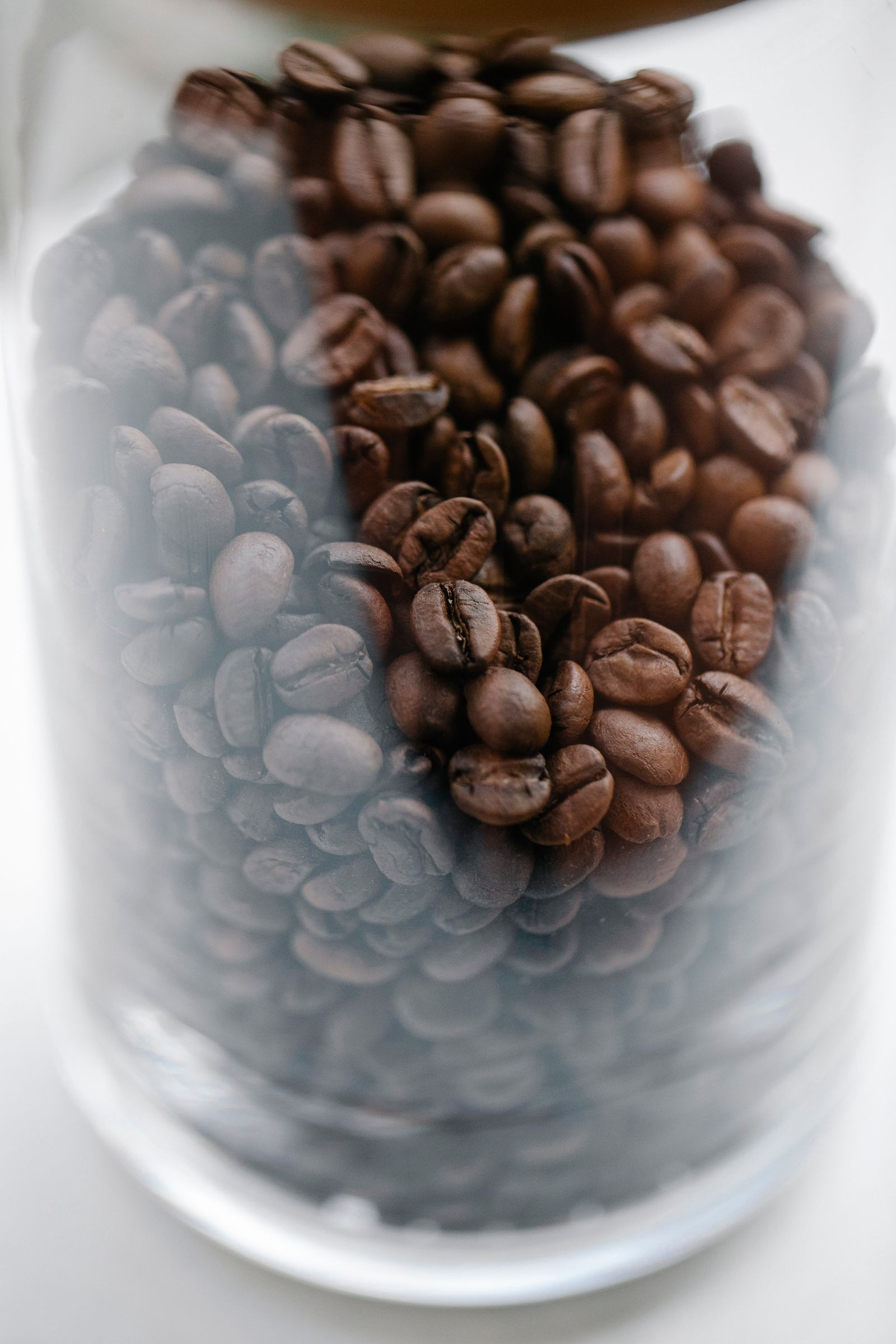
Freshly roasted coffee releases carbon dioxide, so a cup brewed immediately can taste sharp or unsettled. Let the beans rest, loosely covered for the first few hours, then move them to an airtight container. A rest of 12–24 hours is a sensible minimum; many roasts taste better after one to three days.
Store roasted coffee in a cool, dark, dry place. An airtight tin or opaque jar is better for everyday storage than a clear jar left in the sun. Avoid the refrigerator, where moisture and food odors move into the beans, and brew a home batch within a few weeks. Green coffee you have not roasted yet should also stay cool, dry, dark, and sealed; do not refrigerate it. Stored this way, it typically holds quality for many months.
Brew your first home-roasted batch
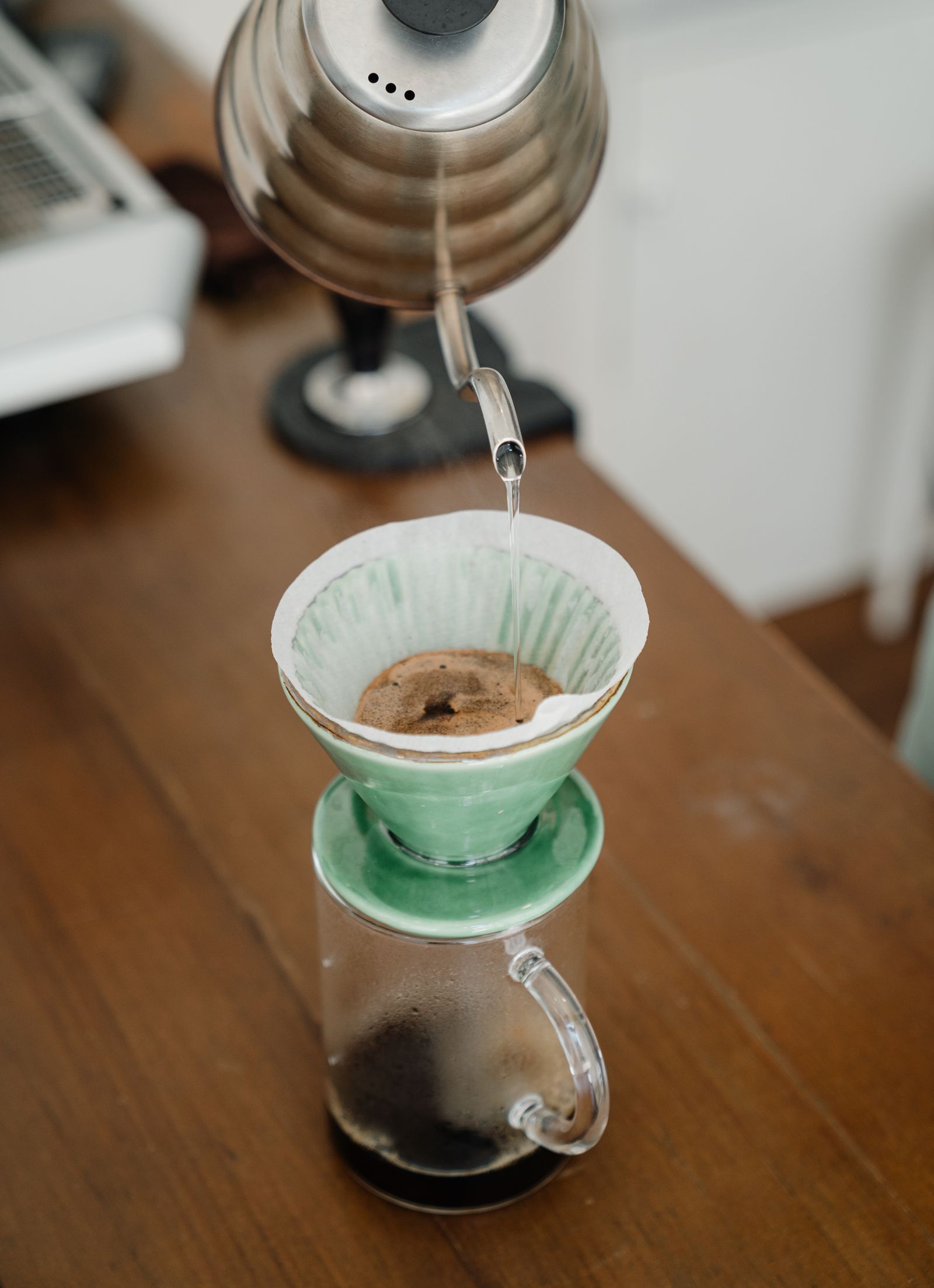
Grind only what you need, just before brewing. Use a burr grinder if you have one. Start with pour-over or French press rather than espresso; both forgive small mistakes and show you what the roast tastes like.
A reliable starting ratio for filter coffee is about 1:15 to 1:16 by weight — for example, 15 g of coffee to 250 g of water just off the boil (about 92–96°C). Washed Ethiopia Yirgacheffe is at its best in a pour-over. Brazil Rio Minas and Colombia Supremo work well in a French press or as daily filter coffee. Vietnam Robusta usually belongs in an espresso blend rather than a light filter cup.
If the brew tastes sour or thin, try a slightly finer grind, or take the next roast a little further after first crack. If it tastes harsh or smoky, grind a little coarser, or drop the next batch earlier.
Troubleshooting common first roasts
Uneven color. The pan was overcrowded, too hot, or the beans were not moving enough. Use a smaller batch and stir without stopping.
Baked or flat flavor. The roast ran too long at too-low heat. Raise the heat slightly so you reach first crack sooner.
Scorched or smoky taste. The pan was too hot, or beans sat still and burned. Preheat more gently and keep them moving.
Grassy or bread-like cup. You probably dropped the beans before first crack had really developed. Wait until popping is clearly underway, then decide how far to go.
Oily, bitter, roast-heavy cup. You went well into second crack. For filter coffee, stop earlier.
FAQ
Can I roast green coffee beans in a home oven?
You can, but it is harder to roast evenly because the beans sit still. A pan or a hot-air popper is more reliable for a first attempt. If you try an oven, stir often, ventilate well, and do not leave it unattended.
How much green coffee should I buy to start?
Start with enough for several small roasts, not a huge sack of a coffee you have never tried. Green beans keep longer than roasted coffee, so a modest bag is enough to learn.
How long do green coffee beans last?
Kept cool, dry, dark, and sealed, green coffee typically stays in good condition for many months, and often up to about a year. Heat and humidity shorten that window. Roast smaller amounts as you need them.
Is the coffee finished when I hear first crack?
No. First crack marks the start of a usable light roast. Stopping shortly after it gives a lighter cup; waiting longer moves you through medium toward darker roasts. See What Is the First Crack in Coffee Roasting.
Should I roast Arabica and Robusta the same way?
The stages are the same, but the cups are not. Arabica lots such as Ethiopia, Colombia, Venezuela, and Brazil generally show more origin character at light to medium roasts. Robusta is often taken further and used in espresso blends for body and crema. Roast them separately first, then blend if you want a stronger shot.
Ready to roast your first batch?
Choose a starting bag from Dubai Coffee’s green coffee beans, roast a small test batch, and brew it the next day. Brazil Rio Minas is a gentle first Arabica; Colombia Supremo is a clean washed option; Ethiopia Yirgacheffe is the one to try for florals and citrus. The shop is based in Istanbul and ships across Türkiye and worldwide.
[…] you are starting with home roasting, our guide to how to roast green coffee beans at home walks through the pan method, first crack, cooling, and the short rest roasted beans need before […]