
A good coffee grind size guide starts with one idea: the longer the water stays in contact with the coffee, the coarser the grind should be. Espresso needs a fine grind because the brew takes only seconds. French press and cold brew need a coarse grind because the water sits with the coffee for minutes or hours.
Get that match right, and the same bag of Colombia Supremo or Ethiopia Yirgacheffe will taste clearer and sweeter. Get it wrong, and even excellent beans can taste sour, thin, or bitter.
This coffee grind size guide covers eight common methods, from Turkish coffee and espresso to pour-over, French press, and cold brew. Use the table as a starting point, then adjust by taste.
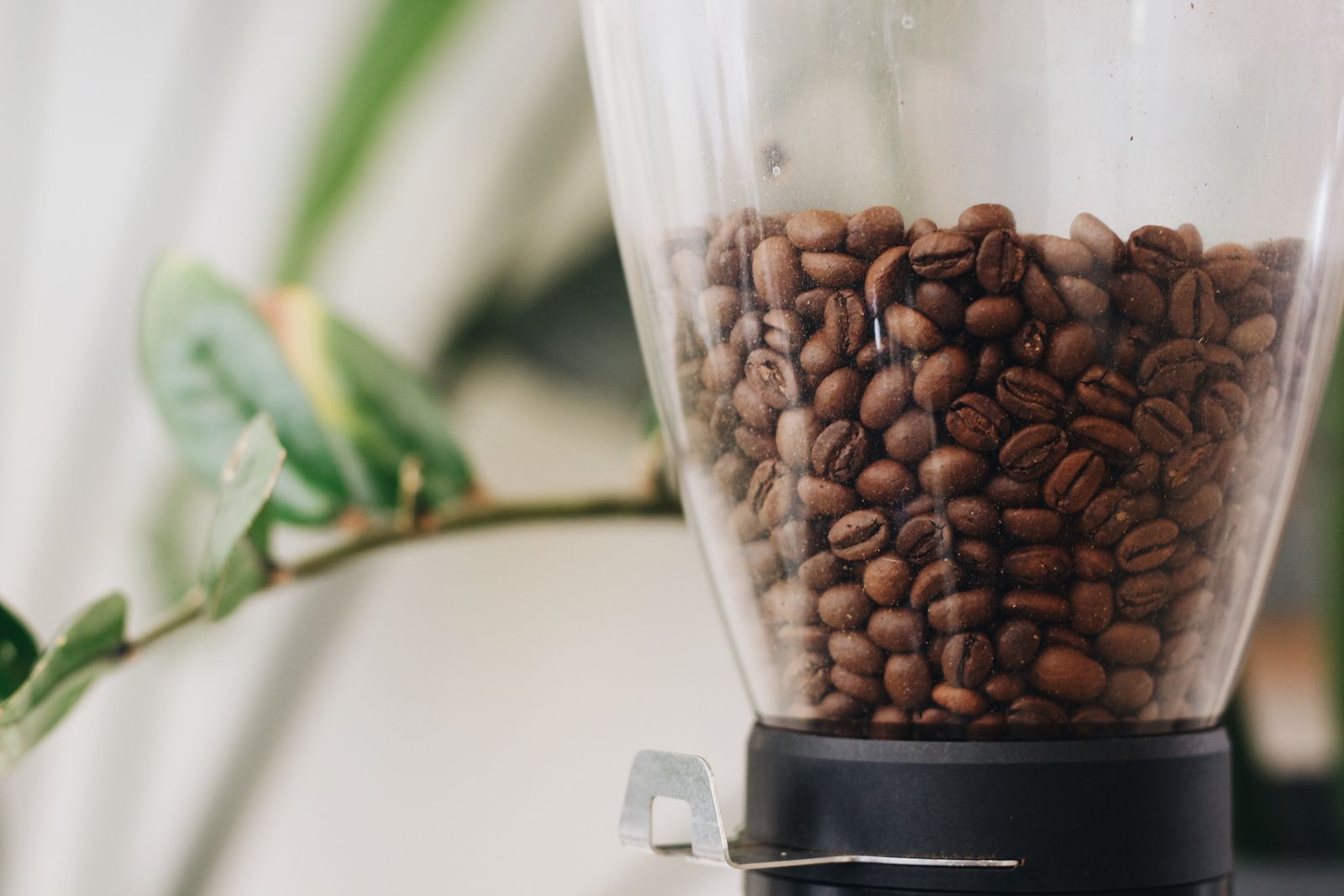
Why grind size matters
Grinding breaks the bean into smaller pieces and exposes more surface to water. A finer grind extracts faster. A coarser grind extracts more slowly and lets water flow through the coffee bed more easily.
That is why grind and brew time have to work together. If the grind is too fine for a long steep, the cup often turns harsh or muddy. If it is too coarse for a short brew, the cup tastes thin or sour.
The National Coffee Association puts the same rule simply: the longer the coffee is in contact with water, the coarser the grind should be. Its brewing guides also start espresso at a fine grind, drip and pour-over at medium, and French press and cold brew at coarse.
Those labels are starting points, not a single “correct” setting. Your grinder, dose, water, and taste all matter. The goal is a cup that is sweet, balanced, and appropriate to the method — not a number on a dial.
Burr grinders versus blade grinders
A burr grinder crushes beans between two burrs and produces a more even particle size. That evenness helps the coffee extract more uniformly, which is especially important for espresso and for methods that need a clearly coarse or clearly fine grind.
A blade grinder chops the beans like a tiny food processor. Some particles come out like dust and others stay chunky, so part of the brew over-extracts while another part under-extracts. You can still make decent filter coffee with a blade grinder if that is what you have, but a burr grinder is the better everyday tool.
The NCA recommends a burr grinder at home or at the shop where you buy your beans. If you do not grind at home, order whole coffee beans and have them ground for your method when you order, or buy ground coffee matched to how you brew.
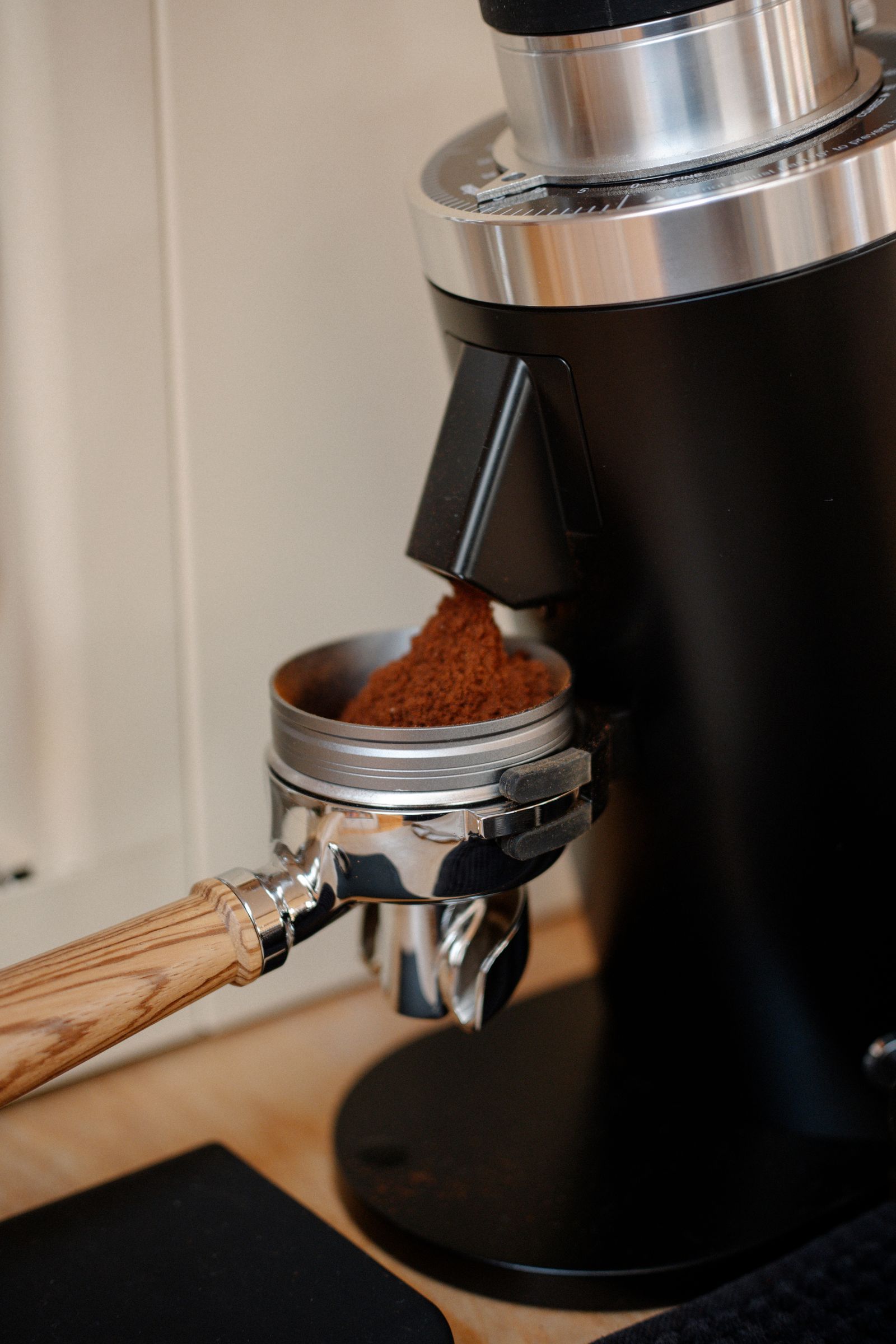
Coffee Grind Size Guide by Brew Method
Use this chart as a first setting. Texture comparisons are everyday references, not laboratory measurements. Start here, brew, taste, and move one step at a time.
| Brew method | Starting grind | Texture (starting point) | Typical contact time |
|---|---|---|---|
| Turkish coffee | Extra fine | Like flour or powdered sugar | A few minutes in the cezve |
| Espresso | Fine | Finer than drip coffee; the NCA compares it to table salt | About 20–30 seconds |
| Moka pot | Fine–medium | Slightly coarser than espresso | A few minutes on the stove |
| Pour-over (V60, similar cones) | Medium-fine | Like table salt, or just a little coarser | About 2.5–4 minutes |
| Drip / filter machine | Medium | Like kosher salt, per the NCA | Around 5 minutes, depending on the machine |
| AeroPress | Medium-fine | Start near pour-over; you can go finer or coarser | Often 1–2 minutes |
| French press | Coarse | Like rock salt or breadcrumbs, per the NCA | About 4 minutes |
| Cold brew | Extra coarse | Coarser than French press | Many hours |
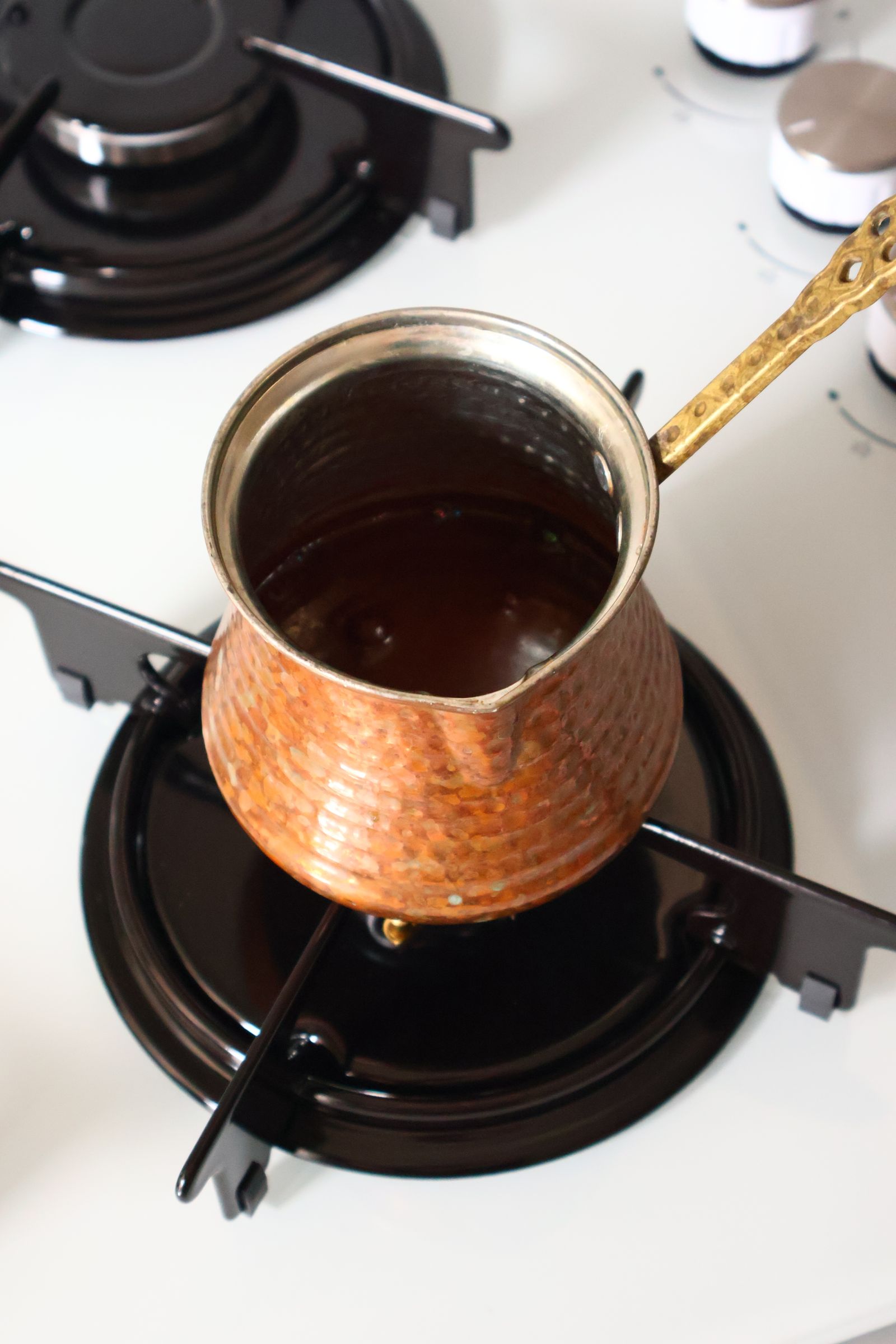
Turkish coffee
Turkish coffee uses the finest grind in this guide — a powder that feels almost silky, not sandy. If you can feel distinct grains, it is usually too coarse, and the grounds will not settle properly in the cup.
Brew it in a cezve (ibrik) and serve it unfiltered, so the grind has to be fine enough to make a thick brew and then sink. Dubai Coffee’s Türk Kahvesi is sold as a traditional fine grind for this method. If you grind at home, use a grinder that can go truly powder-fine; many espresso grinders still leave the coffee a little too coarse.
Espresso
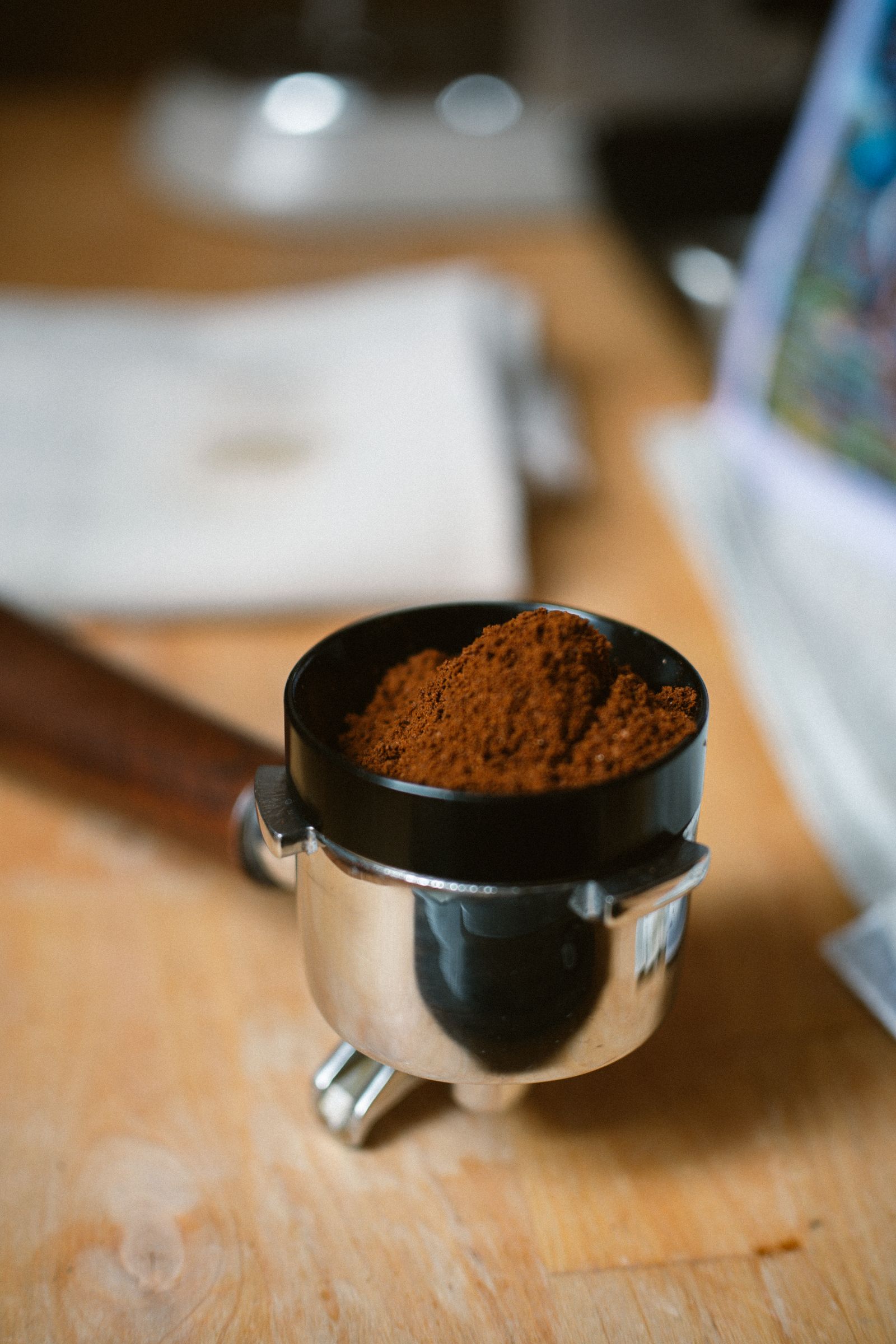
Espresso pushes hot water through a compact bed of fine coffee in a short time. The grind has to be fine enough to create resistance, but not so fine that the shot only drips or tastes harsh.
A common target is a shot that runs in about 20–30 seconds, though machines, baskets, and recipes vary. If the espresso gushes and tastes sour or thin, grind finer. If it crawls, tastes bitter, or chokes the machine, grind coarser.
Blends made for espresso often include some Robusta for body and crema. Dubai Coffee’s BLEND ESPRESSO, Classic, and Strong are built for that kind of cup. A 100% Arabica such as Premium can also be pulled as espresso if you like a lighter, more floral shot.
Moka pot
A moka pot sits between espresso and filter coffee. Start slightly coarser than espresso and slightly finer than pour-over. Fill the basket level, without tamping hard the way you would for espresso.
If the coffee tastes burnt or harsh, try a slightly coarser grind and a more moderate heat. If it tastes weak or watery, grind a little finer. Keep the grind even; dust in a moka basket can make the brew bitter.
Pour-over
Cone pour-overs such as a V60 do well with a medium-fine grind — about the texture of table salt, or just a little coarser. The NCA lists pour-over as a medium grind, which is a fair starting point; many manual pour-overs run a touch finer than a typical drip machine.
Aim for a total brew time of roughly two and a half to four minutes, then adjust. If the water rushes through and the cup is sour or thin, grind finer. If the bed stalls, the brew drags on, and the cup is heavy or bitter, grind coarser.

Washed Ethiopias such as Ethiopia Yirgacheffe are especially well suited to pour-over, where floral and citrus notes stay distinct. A medium Colombia Supremo also works well if you want caramel and chocolate in a clean filter cup.
Drip / filter machine
For an automatic drip machine, start with a medium grind, which the NCA compares to kosher salt. Basket shape and machine cycle time affect the result, so treat this as a first setting.
If the coffee tastes weak, grind a little finer or use a slightly higher dose. If it tastes bitter or the machine is very slow to finish, grind a little coarser. Keep the grind consistent from batch to batch; drip coffee shows uneven particles as a muddy or sharp cup.
AeroPress
The AeroPress is flexible, which is why grind advice for it varies. A reliable start is a medium-fine grind, similar to pour-over, with a brew of about one to two minutes.
You can go finer for a shorter, more espresso-like brew, or coarser for a longer immersion. If the plunger is very hard to push, the grind is probably too fine, or you have used too much coffee. If it slides down with almost no resistance and the cup is thin, grind finer.
French press
French press is an immersion method: the coffee steeps, then you press a mesh filter through it. Start coarse, like rock salt or breadcrumbs, as the NCA suggests, so the mesh does not fill with silt.
A common steep is about four minutes. If the cup is weak or sour, grind a little finer or steep a little longer. If it is muddy or bitter, grind coarser and pour the coffee off the grounds as soon as you press. A chocolatey medium roast such as Colombia Supremo or a Venezuela–Vietnam blend like Classic sits comfortably in a press.
Cold brew
Cold brew steeps for many hours in cold water, so it needs the coarsest grind in this guide — typically coarser than French press. A fine grind in a long cold steep often turns out dusty, bitter, or hard to filter.
Start extra coarse, strain well, and adjust the next batch if the concentrate tastes weak or harsh. Because the brew takes so long, grind quality and a clean, even coarse setting matter more than tiny tweaks mid-steep.
How to adjust the grind by taste
Change only one thing at a time, and move the grinder in small steps.
If the brew tastes sour, thin, or salty, or if the water runs through too fast, the coffee is likely under-extracted. Grind finer so the water has more surface to work with.
If the brew tastes bitter, dry, or hollow, or if it drips too slowly, the coffee is likely over-extracted. Grind coarser.
Also check the obvious extras: dose, water temperature, and time. A grind change will not fix stale beans. For roasted coffee, keep the bag sealed, cool, and dark, as in our guide on how to store coffee beans. Grind just before you brew whenever you can.
If you roast at home, let the beans rest after first crack and cooling — usually at least 12 to 24 hours — before you dial in a grind. Freshly roasted coffee can be gassy and uneven in the cup. Our home-roasting guide covers that rest, then you can come back to this chart.
FAQ
What grind should I use if I have only one grinder setting?
Choose the setting that matches the method you use most. If you mostly make filter coffee, stay near medium. If you split your time between espresso and French press, you really need two settings; those grinds are too far apart for a single compromise to work well.
Is espresso grind the same as Turkish coffee grind?
No. Turkish coffee is finer — a powder — and is brewed without a paper or metal filter in the same way espresso is filtered through a basket. An espresso grind in a cezve usually tastes thin and leaves a sandy cup.
Can I use pre-ground coffee?
Yes. It is convenient, and it works best if the grind matches your method and you use the bag while it is still fresh. Ground coffee stales faster than whole beans, so store it airtight and buy amounts you will finish soon.
Why does my French press taste muddy?
The grind is often too fine, or the coffee sat on the grounds after you pressed. Use a coarse grind, press gently, and pour the coffee out as soon as it is ready.
Should I grind all of my beans at once?
If you can, no. Grind only the next brew. If you prefer coffee ground when you buy it, ask for the grind that matches your brewer and store the bag well.
Grind it for the way you brew
The most useful habit in this coffee grind size guide is simple: pick a starting grind from the table, brew, and adjust by taste. Keep whole beans on hand when you can, and grind them just before you brew.
When you order from Dubai Coffee, you can choose whole beans or have your coffee ground for your brewing method at order time. Türk Kahvesi is already a traditional fine grind; BLEND ESPRESSO and Classic are easy starting points for espresso and everyday cups. The shop is based in Istanbul and ships across Türkiye and worldwide.
[…] distinct grains, it is usually too coarse, and you will get little foam and a sandy cup. See our coffee grind size guide for how Turkish coffee compares with espresso and filter methods. If you grind at home, you need a […]