
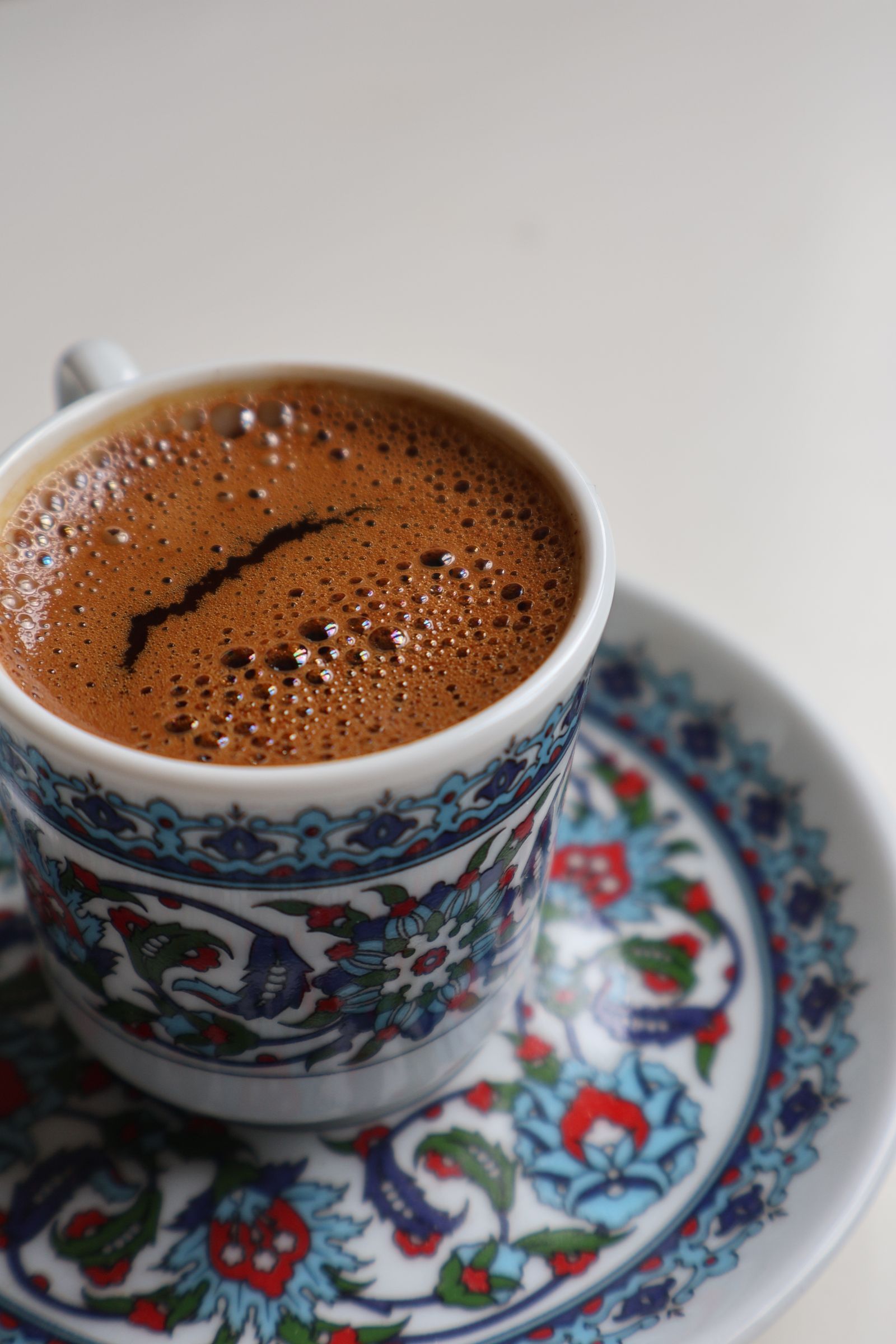
Learning how to brew Turkish coffee at home takes a cezve, an extra-fine grind, cold water, and a little patience. You heat the coffee slowly until a thick foam rises, then pour it unfiltered into small cups. The grounds settle at the bottom, and the foam on top is the mark of a well-made cup.
UNESCO inscribed Turkish coffee culture and tradition on its Intangible Cultural Heritage list in 2013. The official description is a good summary of the method: beans ground to a fine powder, mixed with cold water and sugar in a pot, and brewed slowly on a stove to produce foam. The coffee is served in small cups with a glass of water.
You do not need special beans grown in Türkiye. “Turkish coffee” refers to the grind and the brewing method. A medium roast, pulverized to a powder, is the usual starting point. Dubai Coffee’s Türk Kahvesi is already prepared as a traditional fine grind for this style.

What you need
A cezve (also called an ibrik). This is a small, long-handled pot with a wide base and a narrower neck, traditionally copper or brass, though stainless steel and enamel work on a home stove. Choose a cezve that matches the number of cups you are making. A pot that is much too large spreads the coffee in a thin layer and makes it harder to build foam.
Small cups (fincan). Turkish coffee is served in small cups, often around 60–70 ml. Use the same cup to measure the water, so the portions stay consistent.
Extra-fine coffee. The grind should feel like flour or powdered sugar, finer than espresso. If you can feel distinct grains, it is usually too coarse, and you will get little foam and a sandy cup. See our coffee grind size guide for how Turkish coffee compares with espresso and filter methods. If you grind at home, you need a grinder that can go truly powder-fine.
Cold water and sugar. Start with cold, preferably fresh drinking water. Sugar, if you use it, goes into the pot at the beginning, not into the finished cup.
Choose the sweetness before you brew
Sugar is part of the brewing, not a later addition. Stirring sugar into a finished cup would break the foam. Ask each person before you start, and if two people want different sweetness, brew them in separate cezves.
These are the usual names you will hear in Türkiye:
| Order | Meaning | Typical amount per cup (starting point) |
|---|---|---|
| Sade | Plain, no sugar | None |
| Az şekerli | A little sugar | About half a teaspoon, or one small sugar cube |
| Orta | Medium sweet | About one teaspoon |
| Şekerli | Sweet | About two teaspoons |
Exact amounts vary with cup size and taste. The Turkish Coffee Culture and Research Association gives a similar scale using sugar cubes, from none for plain coffee up to two cubes for a very sweet cup. Use the table as a starting point and adjust the next time.
How to Brew Turkish Coffee: 6 Steps
The steps below follow the traditional cezve method: cold water, a powder grind, sugar added at the start, slow heat, and foam shared into the cups. The Association’s home guide is a useful reference for this sequence.
1. Measure the water
Pour one small coffee cup of cold water into the cezve for each cup you are making. Using the serving cup as the measure keeps the ratio consistent. Room-temperature or cold water is the usual starting point; the coffee should heat slowly from the beginning.
2. Add the coffee and the sugar
Add about one heaped teaspoon of extra-fine Turkish coffee per cup. Traditional guides often put this at around 6–8 grams. If you are taking sugar, add it now.
The Association recommends 7–8 grams per portion and a cezve that is not oversized, so the foam has room to rise without flooding the pot. You do not need a scale on your first tries, but weighing a few times helps you learn what a heaped teaspoon of your coffee actually is.
3. Stir once, before the heat
Stir until the coffee (and sugar, if you used it) is fully mixed and no dry powder is sitting on the surface. This is the main stir. After the cezve goes on the heat, leave it alone so the foam can form and stay intact.
4. Heat slowly on a low flame
Set the cezve over low heat. Slow heating is what builds a dense foam instead of a sudden boil. The Association suggests allowing about three minutes on a low flame; your stove may be a little faster or slower.
Watch the surface. A dark ring of foam will gather and then start to climb the sides of the pot. Stay with it. Turkish coffee can go from perfect foam to a boil-over in a few seconds.
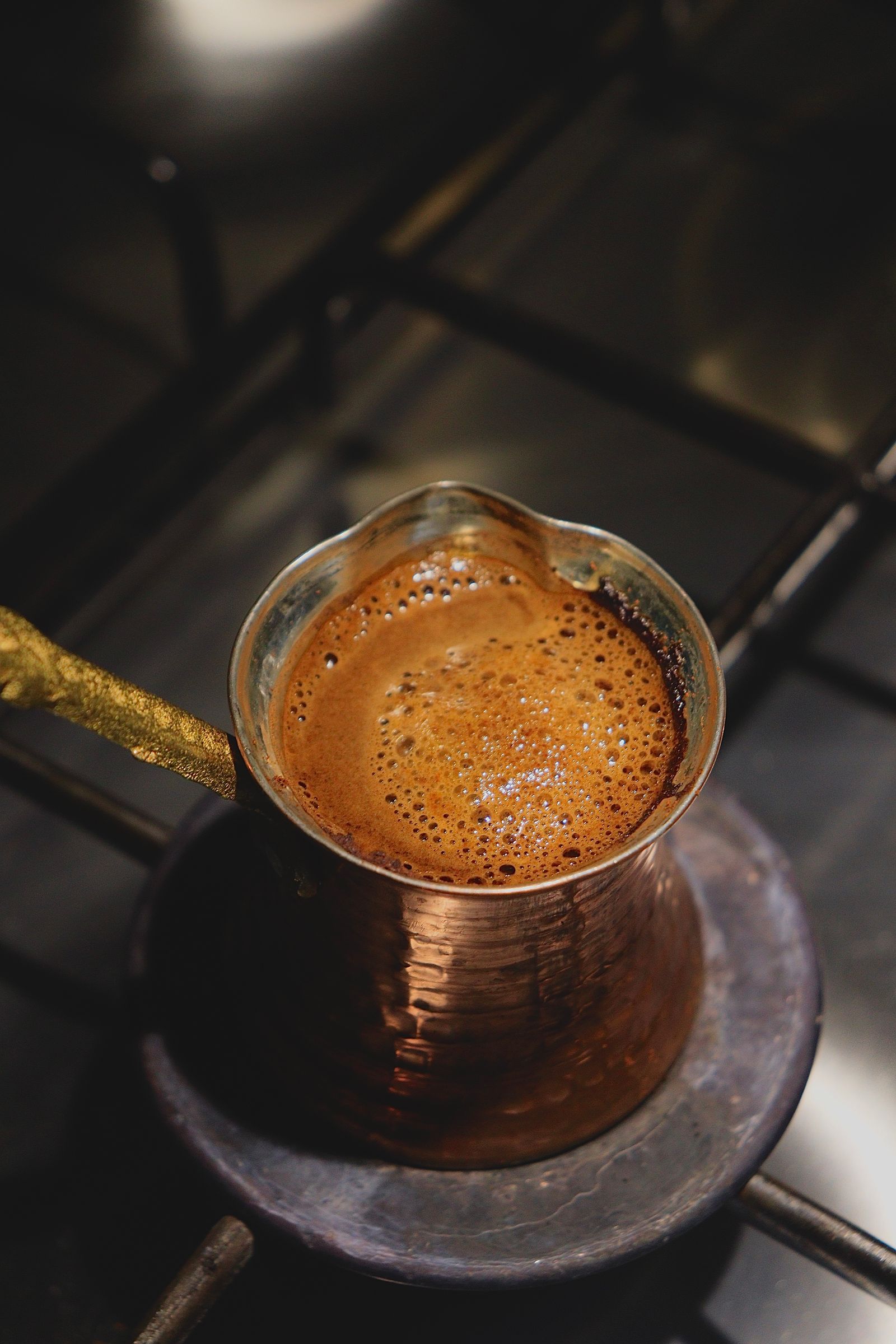
5. Share the foam, then return the pot to the heat
When the foam rises toward the brim, lift the cezve off the heat before it boils over. Spoon equal amounts of foam into each cup, then put the pot back on the low flame.
A second rise will form more foam. Take the cezve off again just before the coffee would boil. The Association advises against letting it boil, which can make the coffee taste bitter and watery. If you like, you can let it rise once more, still without boiling it.
6. Pour slowly and let the grounds settle
Pour the coffee slowly into the cups so the foam stays on top. Give the cups a minute for the grounds (telve) to settle at the bottom. Serve the coffee with a glass of water, and wait to drink until the surface is still.
How to serve it
UNESCO’s description notes that Turkish coffee is served in small cups and accompanied by a glass of water. The water comes first. A sip of water clears the palate so the first taste of coffee is clean.
A piece of lokum (Turkish delight) is a common accompaniment, especially when you are serving guests. Chocolate or a small sweet can stand in if you do not have lokum. The hospitality is part of the drink: there is a well-known saying that a cup of coffee is remembered for forty years.

Do not drink to the last drop. The thick grounds stay in the cup. Stop when the sip starts to feel sludgy. In many households the empty cup is then turned in the saucer so the grounds can be read as a fortune (kahve falı). That custom is part of the culture UNESCO describes; it is optional entertainment, not a required step in the recipe.
Troubleshooting
Little or no foam. The heat was probably too high, the grind was too coarse, or the coffee was not fresh. Use a powder-fine grind, a low flame, and coffee that still smells lively. Our guide on how to store coffee beans applies to ground coffee as well: keep it airtight, cool, and dark, and use it sooner than whole beans.
The pot boiled over. You left it a few seconds too long, or the heat was too high. Stay with the cezve and lift it as soon as the foam climbs.
The cup tastes bitter or watery. The coffee may have boiled, or you may have used too little coffee in too large a pot. Keep it below a rolling boil and match the cezve to the number of cups.
The grounds do not settle, or the cup feels sandy. The grind is too coarse. Turkish coffee needs a powder, not an espresso grind.
The foam broke when you poured. Pour more slowly, and spoon the first foam into the cups before the final pour. Do not stir the pot once it is on the heat, and do not stir sugar into the finished cup.
If you roast your own beans, you can use a medium roast and grind it extremely fine after the coffee has rested. Our home-roasting guide covers roasting and the rest after first crack. For everyday brewing, a bag already ground for Turkish coffee is the simpler path.
FAQ
Can I make Turkish coffee in a saucepan if I do not have a cezve?
A small saucepan can work in a pinch, but a cezve’s narrow neck helps the foam rise and hold together. A pot that is too wide makes thin foam. A one- or two-cup cezve is worth having if you brew this way often.
Should I use hot water to speed things up?
Start with cold water. The slow rise in temperature is what helps the foam develop. Rushing it with hot water or high heat usually means less foam and a greater risk of boiling.
Can two people share one pot if they want different amounts of sugar?
Brew them separately. Sugar is added at the start and cannot be adjusted fairly in a single cezve without spoiling the foam.
Is the coffee safe to drink with the grounds in the cup?
Yes. You drink the liquid and leave the telve behind. The grounds are not meant to be swallowed in a gulp at the end.
Can I reheat leftover Turkish coffee?
It is better to brew a fresh, small pot. Reheating flattens the foam and can make the coffee taste dull or bitter. The method is quick enough that a new cezve takes only a few minutes.
Brew a pot the traditional way
Once you know how to brew Turkish coffee, the ritual is simple enough to repeat every day: measure, sweeten if you wish, heat slowly, and protect the foam. Start with Türk Kahvesi, which is already a traditional fine grind, or order whole beans and have them ground for Turkish coffee at order time.
Dubai Coffee is based in Istanbul and ships across Türkiye and worldwide. Serve the first pot with a glass of water — and lokum, if you have it.